Reading time: 5 minutes
Can increasing the dose of semaglutide help people with obesity lose more weight?
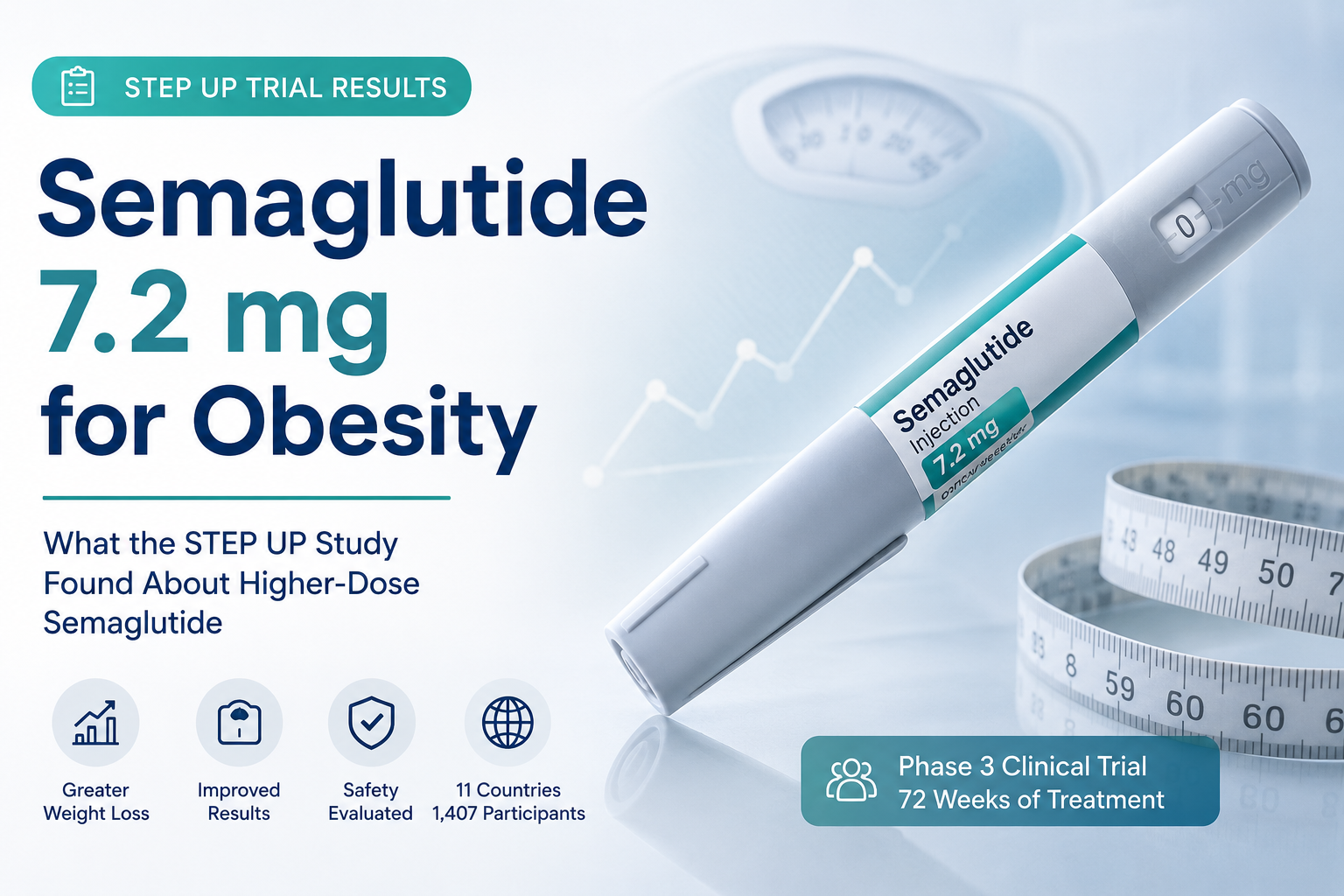
The STEP UP trial (NCT05646706) was designed to answer this question. Researchers compared a higher weekly dose of semaglutide 7.2 mg with the currently approved 2.4 mg dose and a placebo (an injection with no active medicine).
The study found that participants receiving the higher dose achieved greater weight loss over 72 weeks while showing a safety profile that was generally consistent with previous semaglutide studies. These findings suggest that increasing the dose may provide another option for obesity treatment if approved by health authorities.
Trial at a Glance
| Study Detail | Information |
| ClinicalTrials.gov ID | NCT05646706 |
| Study Phase | Phase 3 |
| Participants | 1,407 adults with obesity and no diabetes |
| Countries | 11 |
| Treatment Duration | 72 weeks |
| Treatment Groups | Semaglutide 7.2 mg, Semaglutide 2.4 mg, Placebo |
| Primary Goal | Compare weight loss between treatment groups |
| Main Result | The 7.2 mg dose produced the greatest average weight loss. |
Study Design
What Was the Purpose of the STEP UP Trial?
Obesity is a long-term medical condition that increases the risk of diseases such as type 2 diabetes, heart disease, stroke, sleep apnea, and certain cancers. Although healthy eating and regular physical activity remain the foundation of weight management, many people need additional treatment to achieve and maintain meaningful weight loss.
Semaglutide is already approved at a 2.4 mg weekly dose for chronic weight management in many countries. The STEP UP trial investigated whether increasing the dose to 7.2 mg could improve weight loss while maintaining an acceptable safety profile.
How Does Semaglutide Work?
Semaglutide belongs to a group of medicines called GLP-1 receptor agonists. These medicines copy the action of a natural hormone released after eating that helps regulate appetite.
As a result, semaglutide can help people:
- Feel full sooner
- Stay full for longer
- Feel less hungry between meals
- Eat fewer calories
In the STEP UP trial, participants received one injection each week, with the dose gradually increased during the early weeks of treatment to help reduce stomach-related side effects.
How Was the STEP UP Trial Conducted?
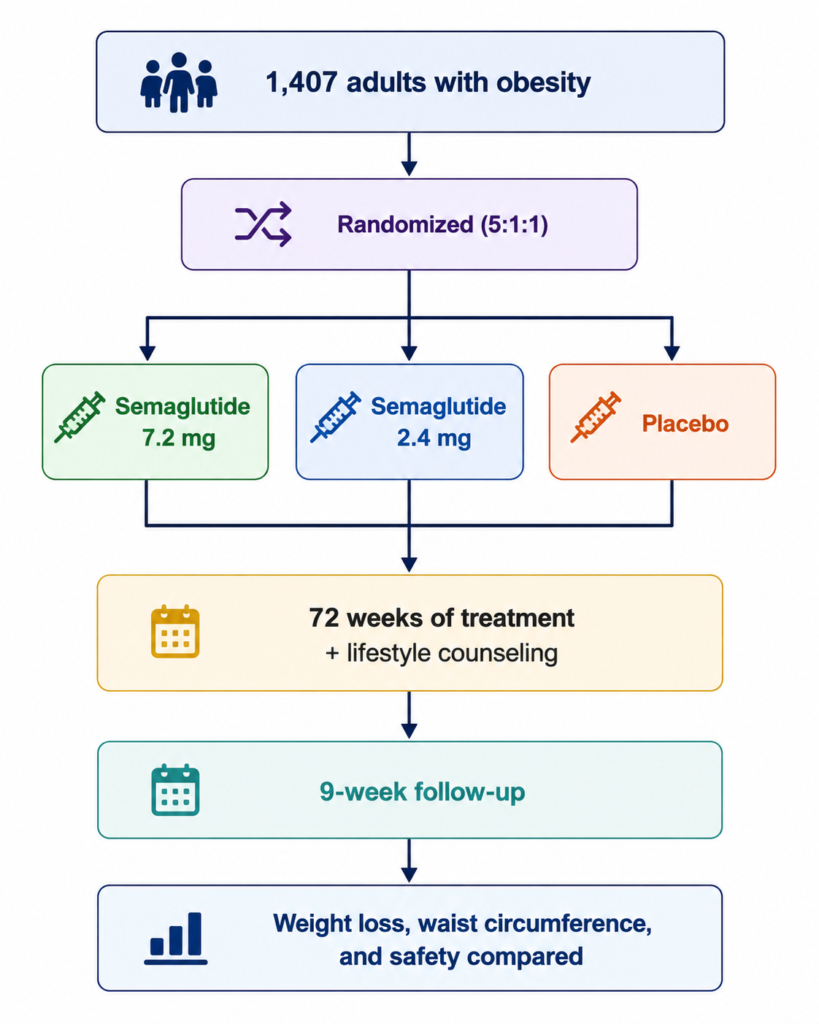
Researchers designed the STEP UP trial to compare the effectiveness of the three study treatments under carefully controlled conditions.
Participants were randomly assigned to a treatment group, meaning they were placed into a group by chance rather than by choice. This helps ensure that differences in the results are due to the treatment itself and not to differences between participants.
The study was also quadruple-masked. Neither the participants, healthcare providers, researchers, nor the people analyzing the data knew which treatment each participant received until the study was complete. This approach reduces the risk of bias and increases confidence in the findings.
Treatment continued for 72 weeks, followed by a 9-week follow-up period to monitor participants after the study medication ended. The trial was conducted at approximately 90 research centers across 11 countries, making it one of the largest studies of a higher-dose semaglutide regimen.
What Did the STEP UP Trial Find?
The study successfully achieved its primary endpoint, meaning it met its main research objective.
Researchers found that participants receiving semaglutide 7.2 mg experienced greater weight loss than those receiving either the approved 2.4 mg dose or placebo by the end of the study.
Average Weight Loss
The primary outcome was the percentage of body weight lost after 72 weeks.
| Treatment | Average Weight Loss |
| Semaglutide 7.2 mg | 18.7% |
| Semaglutide 2.4 mg | 15.6% |
| Placebo | 3.9% |
Among participants who completed their Week 72 assessment, the observed average weight loss reached 19.5% with semaglutide 7.2 mg, compared with 3.8% for placebo.
Weight-Loss Milestones
Average weight loss provides one measure of success, but researchers also looked at how many participants reached clinically meaningful weight-loss milestones.
The higher-dose group outperformed placebo across all predefined targets. It also achieved better results than the 2.4 mg dose for the most ambitious goals, including losing 20% or 25% of starting body weight.
Participants Who Lost at Least 5% of Their Starting Weight
| Treatment | Participants |
| Semaglutide 7.2 mg | 90.7% |
| Placebo | 36.8% |
In practical terms, about nine out of every ten participants receiving semaglutide 7.2 mg lost at least 5% of their starting body weight, compared with about four out of every ten receiving placebo.
Changes in Waist Circumference
Weight alone does not tell the whole story. Researchers also measured waist circumference, which reflects abdominal fat and is linked to the risk of metabolic and cardiovascular diseases.
Participants receiving semaglutide 7.2 mg experienced a significantly greater reduction in waist circumference than those receiving placebo.
| Outcome | Result |
| Greater reduction in waist circumference | 11.7 cm |
This suggests that the higher dose reduced not only overall body weight but also excess fat around the waist.
Was Semaglutide 7.2 mg Safe?
Safety was a key part of the STEP UP trial. Researchers recorded all reported side effects to understand how well participants tolerated the higher dose during treatment.
Overall, the safety findings were consistent with what has already been observed in previous semaglutide studies. Most side effects involved the digestive system and were generally expected for this type of medicine.
Most Common Side Effects
| Side Effect Category | 7.2 mg | 2.4 mg | Placebo |
| Gastrointestinal side effects | 70.8% | 61.2% | 42.8% |
The most frequently reported side effects included:
- Nausea
- Vomiting
- Diarrhea
- Constipation
- Stomach discomfort
Researchers also observed a higher rate of dysaesthesia, an unusual sensation such as tingling, burning, or numbness, in participants receiving the higher dose. Serious side effects were uncommon across all treatment groups.
What Do These Findings Mean?
The STEP UP trial provides evidence that increasing the dose of semaglutide may help some adults with obesity achieve greater weight loss than the currently approved dose.
However, every treatment involves balancing benefits and side effects. While the higher dose produced greater weight loss, digestive side effects were reported more frequently. For this reason, the choice of treatment should always be individualized and made together with a healthcare professional.
It is also important to remember that this study evaluated adults with obesity without diabetes. Additional research is needed to understand how these findings apply to other patient groups and to evaluate outcomes beyond the duration of this trial.
Strengths and Limitations
Every clinical trial has strengths and limitations. Understanding both helps place the findings into the right context.
Strengths
- Large international Phase 3 study with more than 1,400 participants.
- Direct comparison with both placebo and the currently approved semaglutide dose.
- Rigorous randomized and masked study design to reduce bias.
- More than one year of participant follow-up.
Limitations
- Results apply only to adults with obesity who did not have diabetes.
- The study did not evaluate outcomes after treatment was discontinued.
- Longer-term safety and effectiveness remain to be established.
- The trial was sponsored by the manufacturer of semaglutide.
Frequently Asked Questions
Is semaglutide 7.2 mg currently approved for obesity?
The STEP UP trial evaluated this higher dose in a clinical research setting. Availability depends on regulatory review in individual countries.
Who participated in the STEP UP trial?
The study enrolled adults with obesity who did not have diabetes. Whether these findings apply to other groups requires additional research.
What happens next?
Future studies will continue to examine the long-term safety, durability of weight loss, and how higher-dose semaglutide compares with other obesity treatments currently in development or clinical use.
References
- ClinicalTrials.gov. A Research Study to See How Semaglutide Helps People With Excess Weight Lose Weight (STEP UP) (NCT05646706): Study Details and Results.
- Wharton S, Freitas P, Hjelmesæth J, et al. Once-weekly semaglutide 7.2 mg in adults with obesity (STEP UP): a randomised, controlled, phase 3b trial. The Lancet Diabetes & Endocrinology. 2025.
Medical Disclaimer
This article is for educational purposes only and is not medical advice. Clinical trial findings may not apply to every individual. If you have questions about obesity treatment or weight-loss medicines, speak with a qualified healthcare professional before making decisions about your care.
Trialora Promise
Trialora explains clinical trials using publicly available scientific evidence, with ClinicalTrials.gov as the primary source whenever possible. Our goal is to make medical research easier to understand by presenting it in clear, accurate, and balanced language. Trialora is not affiliated with the study sponsor or any regulatory authority.